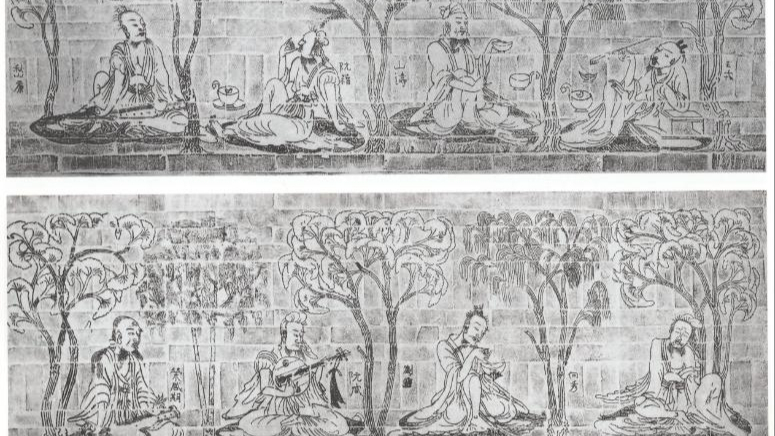
Seven Sages of the Bamboo Grove
Introduction
The Seven Sages of the Bamboo Grove were a group of Chinese scholars, writers, and musicians during the Wei (220-265) and Jin (265-420) dynasties. They are revered for their pursuit of a life of artistic expression and philosophical contemplation, away from the political intrigues and moral constraints of the court. The group included Ji Kang, Ruan Ji, Shan Tao, Xiang Xiu, Liu Ling, Ruan Xian, and Wang Rong. The Sages are often depicted in art and literature as symbols of the idealized literati lifestyle, embodying a spirit of freedom and integrity.
Historical Background
The Seven Sages lived during a time of political instability and social upheaval, following the collapse of the Han Dynasty. The period was characterized by wars among various regional powers for supremacy, leading to the establishment of the Wei and Jin dynasties. Amidst such uncertainty, the Sages retreated to a life of seclusion in the countryside, particularly in the bamboo groves, which provided a serene environment for their philosophical and artistic pursuits.
Ji Kang and the Musical Legacy
Ji Kang, one of the most prominent figures among the sages, was a celebrated scholar, musician, and poet. He is particularly renowned for his association with the guqin, a plucked seven-string Chinese instrument. His performance of the musical piece "Guanglingsan" before his execution is legendary, with the piece said to have died with him, as no one could play it as he did. This act of defiance against the ruling powers symbolizes the Sages' commitment to personal integrity and artistic freedom.
Artistic Representations
The Seven Sages of the Bamboo Grove have been immortalized in various forms of Chinese art, including molded-brick reliefs, paintings, and literature. One of the most notable depictions is the molded-brick reliefs unearthed from the Eastern Jin tomb in Nanjing in 1960. These reliefs, now housed in the Nanjing Museum, portray the Sages and Rong Qiqi, a historical figure often associated with the Warring States period (475-221 BC), in a state of relaxed contemplation under gingko trees. The reliefs are considered some of the earliest surviving portraits of the Wei-Jin period.
Influence on Chinese Culture
The Seven Sages have left a lasting impression on Chinese culture, embodying a spirit of intellectual freedom and resistance against authoritarianism. Their lifestyle and philosophy have been romanticized as an ideal blend of intellectual pursuit and natural living. This ideal has been explored and reimagined in modern times through various art forms, including theater and music. The story of Ji Kang and the Sages, for instance, has been adapted into a drama titled "Guanglingsan," showcasing their enduring cultural significance.
Modern Interpretations and Cultural Significance
In contemporary times, the Seven Sages of the Bamboo Grove are often compared to the countercultural movements of the 20th century, such as the hippies in the United States. Both groups shared a disdain for war, an appreciation for a bohemian lifestyle, and a love for music and artistic expression. This parallel draws attention to the timeless nature of the Sages' ideals, which continue to resonate with those seeking a life of authenticity and creativity outside societal norms.
Preservation and Exhibition
The Nanjing Museum, where the reliefs of the Seven Sages are preserved, plays a crucial role in maintaining their legacy. The museum, which is one of China's first large-scale comprehensive museums, offers free admission, allowing visitors to explore the rich history and cultural heritage represented by the Sages and other historical figures. Through exhibitions and educational programs, the museum contributes to the ongoing appreciation and understanding of the Seven Sages and their impact on Chinese culture.
The Seven Sages of the Bamboo Grove represent a significant chapter in Chinese history, where art, philosophy, and resistance to authoritarianism intertwined to create a unique cultural legacy. Their influence extends beyond historical and geographical boundaries, inspiring generations to pursue a life of intellectual and artistic freedom. As symbols of cultural resilience and integrity, the Seven Sages continue to hold a revered place in the annals of Chinese art and literature, embodying ideals that remain relevant in contemporary society.








